- Today
Give Dottie Her First Job—Without Giving Up Control
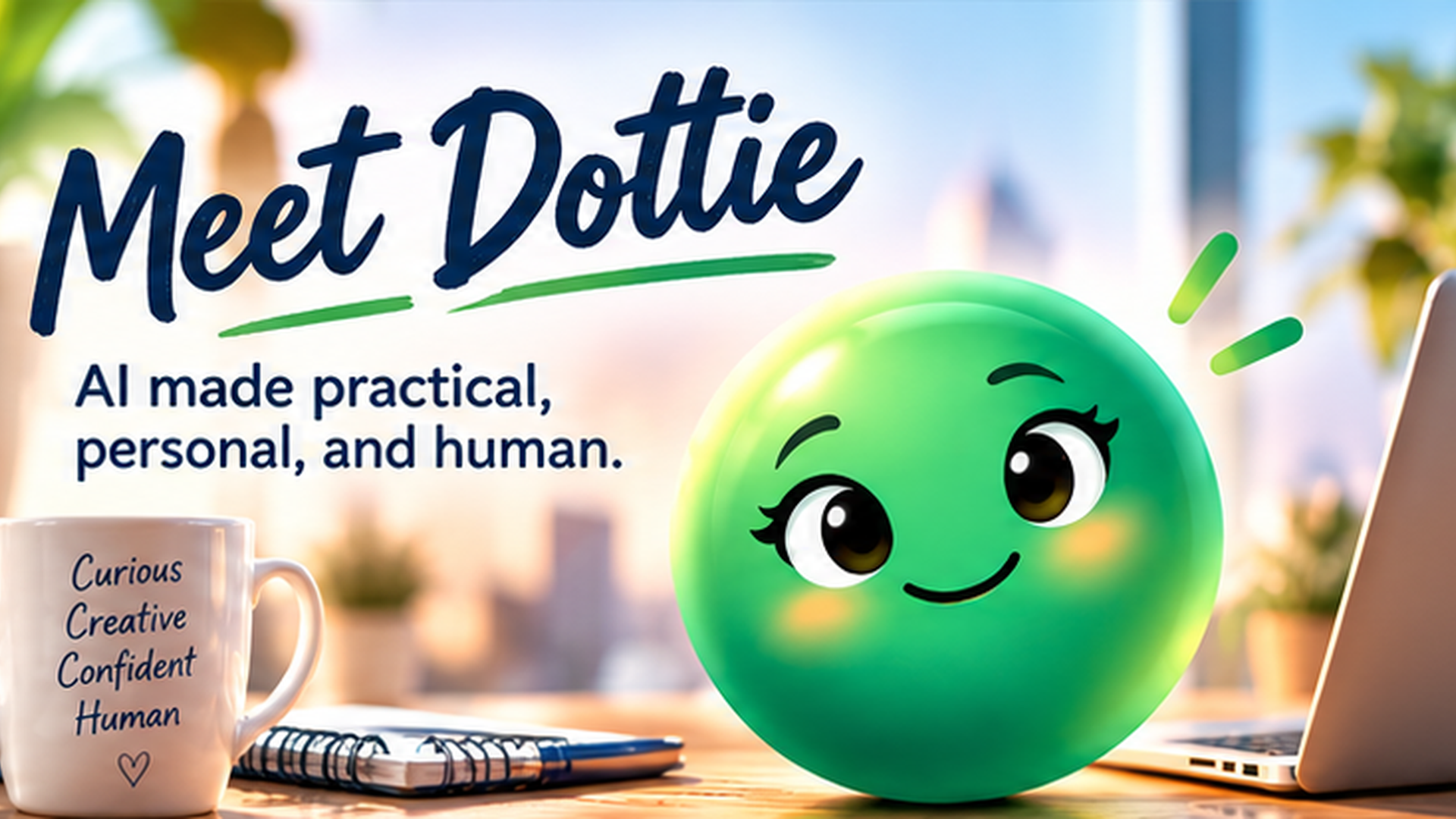
What if an AI assistant could help you reclaim an hour of busywork this week? You don't need to automate your whole life to find out. Start with one small assignment, and keep the decisions where they belong: with you.
I call my new AI assistant Dottie. She's cheerful, quick to help, and available for repetitive tasks. But she can't experience friendships, family responsibilities, or the feelings behind a difficult conversation. That means she needs clear instructions—and human judgment.
Decide Before Delegating
Here's our guiding principle: We make the decisions. AI helps carry them out.
Think about an assistant handling your email. Sorting routine messages could save time. Sending an automatic cheerful response to a friend who is hurting could damage trust. The difference isn't technical skill; it's recognizing which situations require a human response.
Before you assign a task, decide what the AI may do independently, what it should prepare for your review, and what it must never do without permission.
Your Five-Minute Challenge
Step 1 — Name your assistant.
Open ChatGPT or another AI assistant. Use a custom assistant if available, or begin with a regular conversation. We'll call ours Dottie.
Step 2 — Give it one job.
Paste this instruction:
“Dottie, you're my project assistant. Help me organize ideas and identify practical next steps. Ask questions when something isn't clear. Keep your answers simple and help me maintain a list of unfinished projects in this conversation.”
Step 3 — Set your boundaries.
Add:
“Never delete, change, publish, or share anything without my approval. Don't make important decisions for me. When you're uncertain, ask rather than guess.”
Step 4 — Test it.
Tell Dottie about three projects you've been thinking about. Ask for a short list with each project's purpose, one next action, and any questions that still need answers.
Step 5 — Review and teach.
Did the assistant understand your intent? Did it overlook something? Correct the result and explain why. You're not just getting a list. You're practicing how to supervise AI.
A Real-Life Example
I've used my AI to find six high-protein, low-carb recipes, examine photos of my fridge and pantry, and prepare a shopping list for what I still needed. It even organized the list in my local store's aisle order.
At home, my AI also helps coordinate smart-lighting routines that I set up. My study shelves change colors for holidays, and RFID tags help my smart-home system identify where I am indoors. The technology follows rules I choose.
These are useful tasks because the goal is clear and the outcome can be checked. That doesn't mean I should hand the same authority to an AI when someone needs empathy, discretion, or a personal decision.
Share What Happened
Trust doesn't come from one impressive answer. It develops as you verify results, understand limitations, and set better boundaries.
Try the five-minute challenge and share one thing Dottie organized well—and one thing you corrected. Post your result in Wins & Intros or continue the discussion in AI Tools & Tutorials here in the community.
You don't have to become a programmer to benefit from AI. You do need to remain the person deciding what matters.