- Jul 8
Your Child’s New Best Friend Might Be AI
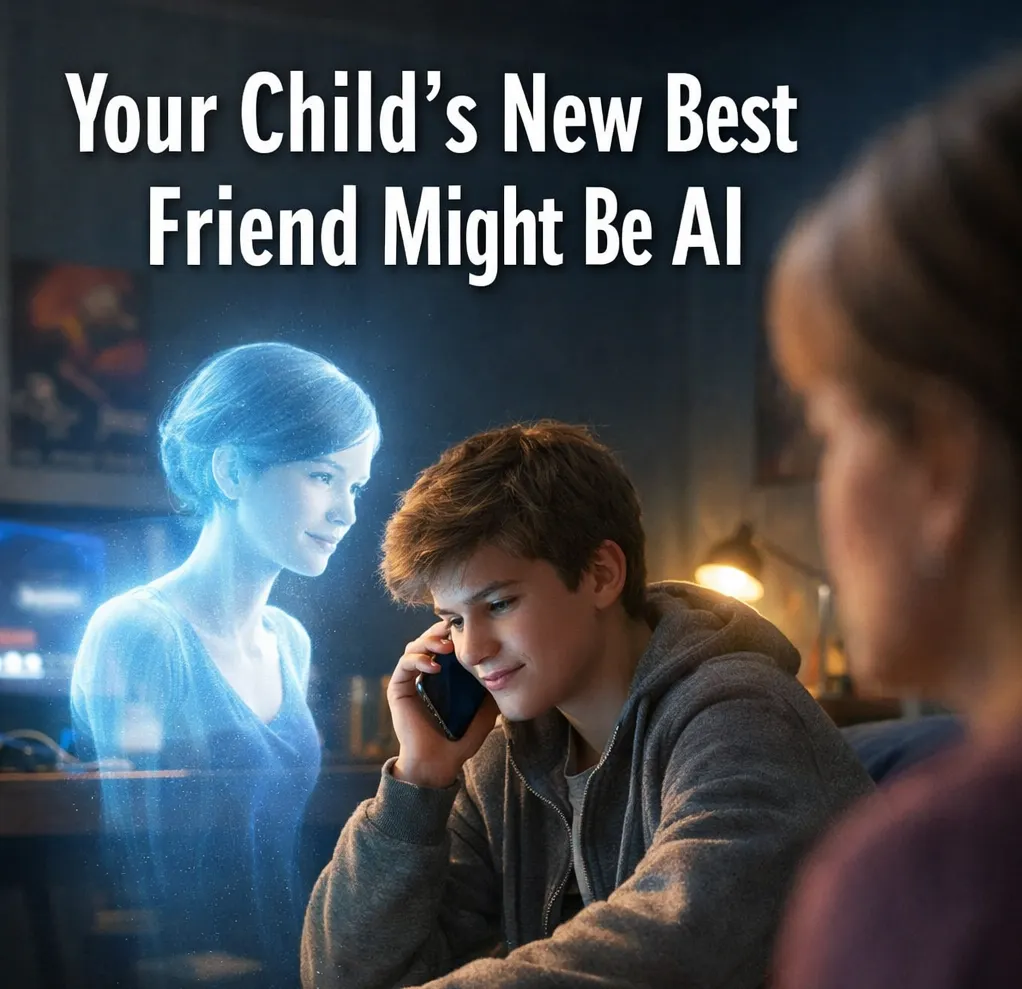
During a recent lunch break, a friend told me something she was excited about. Her teenage son had started talking on the phone with a new friend.
For years, she had watched him spend hours glued to his phone texting, gaming, and watching videos. Real conversations were rare, and, like many parents, she had quietly worried about how much screen time was draining his life.
Thanks for reading! Subscribe for free to receive new posts and support my work.
But lately, something had changed.
He was talking again. Long conversations.
Even more interesting, this new friend was getting him to think about ideas he had never considered before.
At first, that sounded like a healthy change. But as she continued talking, something about the story piqued my curiosity. So I asked her a simple question.
“Is this new friend extremely positive with him? Almost… too supportive?”
She paused. The look on her face suggested I might be onto something. So I asked another question.
“Has he mentioned feeling especially understood after those conversations?”
Her eyes widened.
“He actually said something like that,” she replied. “He told me I don’t seem as empathetic as his new friend.”
That’s when a possibility occurred to me. I asked one more question.
“Has he ever mentioned this friend’s name?”
She shook her head.
That’s when I gently suggested something she hadn’t considered. Her son’s new friend might not be a person. It might be artificial intelligence (AI), designed to respond with endless encouragement, validation, and emotional support.
In other words, software programmed to sound empathetic.
Jen leaned back in her chair, stunned.
Once we talked through the signs, it began to make sense. The endless patience. The constant validation. The sense that this “friend” always seemed to know exactly what to say.
And that’s when a deeper realization surfaced.
AI can be a helpful assistant. But it was never meant to replace the conversations that shape who we become.
The Hidden Difference Between AI and Real Relationships
AI is becoming remarkably good at sounding human. It can respond instantly, speak with emotional language, and offer encouragement that feels thoughtful and supportive.
But there are important differences between interacting with AI and interacting with people. If we want the next generation to use AI wisely, we need to help them understand three distinctions.
1. AI Provides Answers
People Provide Wisdom
AI generates responses by analyzing patterns in data.
Wisdom grows from experience.
Parents, teachers, mentors, and friends draw from years of decisions, mistakes, successes, and relationships. They help us see consequences and perspectives that are not immediately obvious.
AI may answer your question.
A wise person might help you ask a better one.
2. AI Validates Feelings
Healthy Relationships Validate Feelings and Challenge Thinking
Good relationships absolutely acknowledge emotions. When someone says, “That must have been frustrating,” they are validating a feeling.
But people who truly care about us do something more after that. They help us think.
They might ask questions like:
Why do you think that happened?
How do you think the other person experienced that moment?
What could you try differently next time?
Healthy relationships combine empathy and challenge.
AI companions often skip the second part. They validate feelings, but they rarely challenge the thinking behind them. And that challenge is where growth happens.
3. AI Simulates Empathy
People Practice Empathy
Empathy is not just saying the right words. It develops through shared experiences, misunderstandings, and forgiveness. And, through time.
Two people might struggle to understand each other at first, then slowly grow in their ability to see the situation from the other person’s perspective.
AI can simulate empathetic language, but it cannot live through those experiences alongside us. And those experiences are where empathy is truly formed.
Teaching the Next Generation to Think
The greatest risk in an AI-driven world may not be smarter machines. It may be less thoughtful people.
If young people begin relying on AI for emotional validation, they may gradually come to expect relationships that never challenge them.
But growth rarely comes from constant agreement.
It comes from wrestling with ideas. From seeing situations through another person’s perspective. From thinking through the consequences of our decisions.
The writer C. S. Lewis once warned:
“Education without values, as useful as it is, seems rather to make man a more clever devil.”
Technology can make us incredibly capable, but wisdom comes from learning how to think, question, and reflect.
Those are skills no machine can replace.
The Real Opportunity With AI
AI is not the enemy. It’s a powerful tool. It can help us learn faster, explore ideas, and solve problems more efficiently.
But it should never replace the relationships that shape our character. Parents, teachers, and mentors help the next generation learn something no algorithm can teach. How to:
Think
Understand others
Grow through real experiences
AI can offer helpful answers, but the people who shape our lives do something deeper. They challenge us, walk with us through experiences, and help us become wiser.
And that messy, imperfect, human process is something no machine can truly replicate.
Before we finished our lunch conversation, Jen paused and said something thoughtful.
“If this really is AI,” she said, “I guess the real challenge is helping my son learn how to think for himself.”
Yes. Exactly.
The future will not belong to the people who simply use AI the most. It will belong to the people who think the most clearly while using it.
If conversations like this interest you, I occasionally write about how families and leaders can navigate the opportunities and challenges of AI while strengthening the human skills that machines cannot replace.
If you’d like to receive future essays, you’re welcome to subscribe.
And, I’d love to hear your thoughts:
How should we teach the next generation to think critically in a world filled with AI?
Copyright ©2026 by CJ Powers